

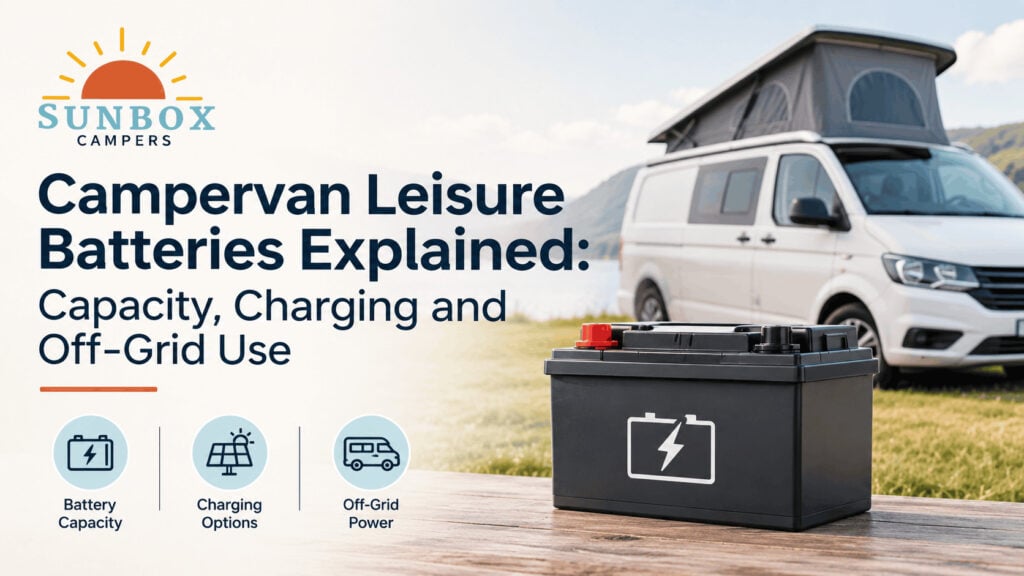
A leisure battery is designed to supply electrical power to your campervan’s living area. Unlike a starter battery, which provides the power needed to start the engine, a leisure battery runs everyday appliances and electrical equipment.
Depending on your setup, it can power:
- LED interior lights
- Fridges and coolers
- USB charging points
- Water pumps
- Campervan heating controls
- Small electrical appliances
Most campervans use a 12V leisure battery system. Having a separate battery for your living area means you can use essential equipment without relying directly on your vehicle’s starter battery.
If you’re planning a conversion, it’s worth understanding how the battery connects with the rest of your mini camper vans UK setup.
For anyone considering professional campervan conversions in the UK, the electrical system is an important part of creating a comfortable and practical living space. Sunbox Campers specialises in handcrafted custom campervan conversions, including electric campervans and compact micro campervan designs. Choosing the right electrical setup helps make your camper suitable for everyday travel and off-grid adventures.
Types of Leisure Batteries
Not all leisure batteries work in the same way. The right choice depends on your budget, electricity requirements and how often you travel.
1. AGM Batteries
AGM stands for Absorbent Glass Mat. These batteries are a type of sealed lead-acid battery.
They are commonly used in campervans because they are relatively affordable and require little routine maintenance.
Best for: Occasional trips, basic electrical setups and campervan owners working with a limited budget.
2. Lithium Batteries
Lithium iron phosphate batteries, also known as LiFePO4, are a popular option for modern campervan electrical systems.
They are lighter than comparable lead-acid batteries and generally offer more usable capacity. They also support faster charging when the system is designed correctly.
Most quality lithium leisure batteries include a Battery Management System (BMS), which helps protect the battery against unsafe operating conditions.
Best for: Regular travellers, longer off-grid trips and people who need more usable electrical capacity.
3. Gel Batteries
Gel batteries use an electrolyte in gel form rather than a free-flowing liquid. They are sealed and designed for deep-cycle applications.
However, they need a compatible charging system. Incorrect charging settings can reduce their lifespan.
Best for: Campervan owners who prefer a sealed lead-acid battery and have a compatible charging setup.
Understanding Leisure Battery Capacity
Battery capacity tells you how much electrical energy a battery can store. It is usually measured in amp-hours (Ah).
For example, a 100Ah battery has a rated capacity of 100 amp-hours.
However, the amount of power you can actually use depends on the battery chemistry and its manufacturer’s recommended discharge limits.
How Much Battery Capacity Do You Need?
Your requirements depend on the appliances you use and how long you want to stay away from a campsite hookup.
As a starting point:
- 100Ah: Suitable for lighter electrical use.
- 150Ah to 200Ah: Worth considering for more regular off-grid use.
- 200Ah or more: May suit larger electrical setups with higher daily energy demands.
These are general starting points, not fixed recommendations. A lithium battery and an AGM battery with the same Ah rating will not necessarily provide the same usable energy.
Before buying, calculate the daily power consumption of your appliances.
For example, if your lights, fridge, phone chargers and water pump use a combined 40Ah per day, you need enough usable battery capacity to cover that demand between charging sessions.
How to Charge a Campervan Leisure Battery
A leisure battery needs regular charging to maintain its performance. Most campervans use one or more of the following charging methods.
1. Charging While Driving
A DC-DC charger allows your leisure battery to charge using power from the vehicle’s alternator.
This is useful when travelling between destinations because driving time can help replenish the battery.
It also helps provide controlled charging for different battery types, including lithium systems.
2. Solar Panel Charging
Solar panels are a practical option for people who regularly camp away from electrical hookups.
They collect sunlight and send power to the leisure battery through a solar charge controller.
An MPPT controller can help improve energy collection, particularly when sunlight conditions change.
Solar charging is useful during summer trips, although performance depends on weather, daylight hours, panel positioning and energy consumption.
3. Mains Hookup Charging
A mains charger allows you to recharge your leisure battery using a campsite electrical hookup or a suitable domestic power supply.
It’s a convenient option when staying at campsites or preparing your campervan before a journey.
Always use a charger with a charging profile suitable for your battery type.
Using Leisure Batteries for Off-Grid Camping
One of the main reasons people install leisure batteries is to enjoy camping without depending on campsite electricity.
With the right battery capacity and charging setup, you can operate essential equipment while travelling independently.
However, off-grid power requires a little planning.
Start by identifying which appliances you need every day. A fridge running continuously will have different energy requirements from a few LED lights used in the evening.
You should also consider:
- Available sunlight for solar charging.
- How often you drive between stops.
- Your total daily electricity consumption.
- Battery capacity and usable energy.
- Whether you need an inverter for 230V appliances.
An inverter converts battery power into mains-style AC electricity, but it also uses energy. For this reason, smaller 12V appliances can be a more efficient choice where suitable.
A well-planned system helps you avoid running out of power during longer trips.
For those interested in a professionally designed campervan, choosing the right conversion is just as important as selecting the battery. Sunbox Campers offers bespoke campervan builds, electric campervan conversions and micro campers designed around practical living, comfort and sustainable travel. These options can suit different travel needs, from compact weekend adventures to longer off-grid journeys.
Common Leisure Battery Mistakes
Even a good battery can perform poorly if it isn’t used correctly. Here are some mistakes worth avoiding.
- Choosing capacity without checking usage: A battery that looks suitable on paper might not support your actual daily consumption.
- Using an unsuitable charger: Different battery chemistries require different charging settings.
- Ignoring battery monitoring: Without checking the state of charge, you may not realise how quickly your power is being used.
- Leaving a battery discharged: Long periods at a low state of charge can shorten the lifespan of lead-acid batteries.
- Installing lithium without checking compatibility: The alternator, chargers, wiring and protection systems must all work with the chosen battery.
If you’re unsure about wiring, fusing or charger compatibility, get advice from a qualified campervan electrical installer.
Tips for Maintaining Your Battery
A little maintenance can help keep your leisure battery working reliably.
- Check the battery condition and connections regularly.
- Recharge the battery according to the manufacturer’s guidance.
- Avoid repeatedly discharging lead-acid batteries too deeply.
- Keep terminals clean and check for corrosion.
- Follow the correct storage procedure when your campervan isn’t being used.
- Make sure the battery is securely installed and protected from damage.
For lithium batteries, pay particular attention to the manufacturer’s temperature limits, BMS settings and charging instructions.
Key Takeaways
- A leisure battery powers your campervan’s living area.
- AGM, gel and lithium batteries have different characteristics.
- Battery capacity should match your daily electricity consumption.
- DC-DC chargers, solar panels and mains chargers provide different charging options.
- Solar charging can make off-grid camping easier.
- Correct installation and regular maintenance help protect battery performance.
Conclusion
A reliable leisure battery setup makes campervan travel much easier, especially when you enjoy spending time away from campsites. The important thing is to choose a battery that matches your electrical requirements rather than simply buying the biggest capacity available.
Consider your daily power usage, battery type, charging options and future travel plans before making a decision. With the right setup and proper maintenance, you can enjoy a dependable power supply and make the most of your time on the road.
If you’re planning a new campervan, Sunbox Campers can help you explore custom campervan conversions, electric campervans and micro campervan options. Their handcrafted designs focus on practical layouts, quality materials and comfortable travel, helping you choose a camper that suits your adventures.
Frequently Asked Questions
1. How long does a campervan leisure battery last?
It depends on the battery type, capacity, electrical consumption and maintenance. A battery may last from a few hours to several days depending on what you run.
2. Is a 100Ah leisure battery enough for a campervan?
A 100Ah battery can be suitable for basic electrical needs, such as LED lights, phone charging and limited appliance use. Higher consumption may require additional capacity.
3. Are lithium leisure batteries better than AGM?
Lithium batteries generally offer more usable capacity, lower weight and faster charging. AGM batteries are usually cheaper upfront, making them suitable for simpler setups.
4. Can solar panels charge a campervan leisure battery?
Yes. Solar panels can charge a leisure battery through a compatible solar charge controller. The amount of power generated depends on sunlight, panel size and positioning.
5. Can I use a leisure battery while driving?
Yes. A properly installed charging system can charge the leisure battery while the engine is running. A suitable DC-DC charger is commonly used for this purpose.
6. How many leisure batteries does a campervan need?
Many smaller campervans use one leisure battery. Larger setups with fridges, heating systems and additional electrical equipment may benefit from a larger battery bank.
7. Can I leave my campervan leisure battery connected all winter?
It depends on the battery type and manufacturer recommendations. Check its storage requirements, disconnect unnecessary loads where appropriate and maintain a suitable state of charge. Lithium batteries also have specific low-temperature charging restrictions.lso have specific low-temperature charging restrictions.