

How Does Campervan Solar Power Work?
A campervan solar system uses panels to collect energy from daylight and turn it into electricity. This electricity passes through a solar charge controller before being stored in your leisure battery.
You can then use that stored energy to power suitable campervan appliances.
A typical system includes:
- Solar panels: Collect energy from daylight.
- MPPT charge controller: Regulates the power going into the battery.
- Leisure battery: Stores electricity for later use.
- Inverter: Converts battery power into 230V AC electricity for compatible mains appliances.
- Battery monitor: Helps you check how much energy you are using and how much remains.
Not every campervan needs an inverter. Many common appliances, including LED lights, water pumps and USB chargers, can run directly from a suitable 12V system.
How Much Solar Power Does a Campervan Need?
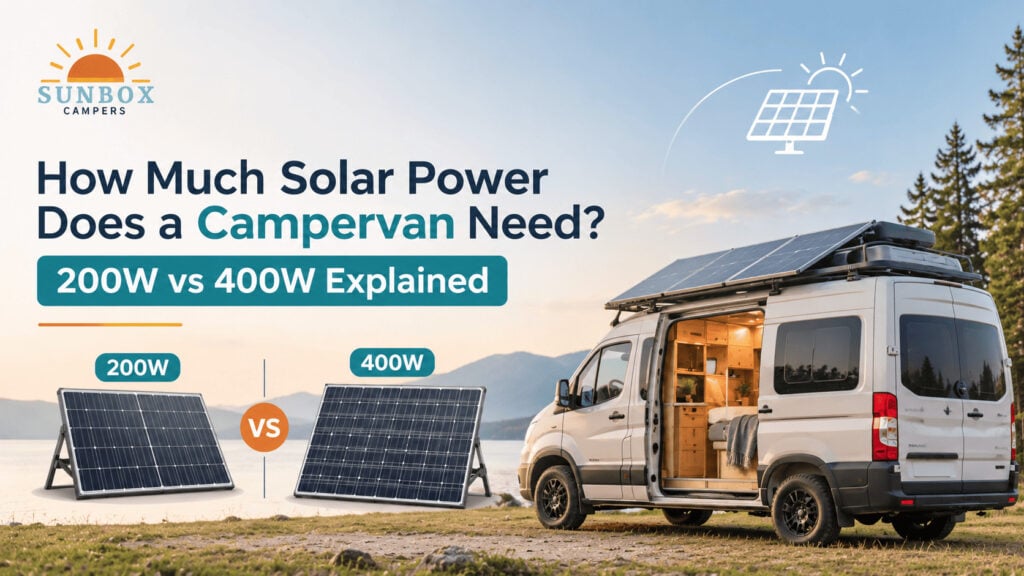
For many campervan owners, 200W to 400W is a useful starting range.
A 200W system can suit lighter electricity use, particularly during the brighter months. A 400W system gives you more potential energy generation and is worth considering if you use a fridge, charge several devices or spend longer periods away from campsite electrical hook-ups.
However, there is no single solar panel size that works for everyone.
Before choosing, make a list of your electrical appliances and estimate how much energy each one uses in a normal day.
Energy consumption is measured in watt-hours (Wh). For example, an appliance using 20 watts for three hours consumes 60Wh.
Add the daily consumption of your appliances together. This gives you a much better starting point than choosing panels based only on their advertised wattage.
Is 200W Solar Enough for a Campervan?
For many weekend travellers and couples, 200W can provide a useful amount of solar power.
It may support everyday electrical needs such as:
- LED interior lighting
- Phone and tablet charging
- Water pump operation
- Small USB devices
- A 12V fridge, depending on its consumption and the weather
The main advantage is that a 200W system usually needs less roof space than a larger setup. It can be a practical choice for compact campervans where space is limited.
When 200W Makes Sense
Consider 200W if you:
- Mainly use your campervan for weekend trips.
- Travel during spring and summer.
- Use low-energy 12V appliances.
- Spend some time driving between destinations.
- Can occasionally use campsite hook-up facilities.
Where 200W May Fall Short
A smaller system may struggle to replace all the electricity you use if you run a fridge continuously, charge several devices and stay parked for multiple days.
Cloudy weather and shaded parking can reduce solar generation too. If your daily electricity use is higher than the energy your panels produce, the leisure battery will gradually lose charge.
Is 400W Solar Worth It?
A 400W solar system provides twice the rated panel capacity of a 200W setup. This gives it more potential to generate electricity when sunlight is available.
It can be a better choice for people who regularly travel off-grid or use several electrical appliances.
A 400W system may suit campervan owners who use:
- A 12V compressor fridge
- LED lighting throughout the van
- Phones, tablets and laptops
- Ventilation fans
- A television or other low-power entertainment devices
- Selected appliances through a suitable inverter
The extra capacity gives you more flexibility, but it does not guarantee complete energy independence.
When 400W Makes Sense
A larger system is worth considering if you:
- Regularly spend several days away from electrical hook-ups.
- Use a fridge throughout the day.
- Work remotely from your campervan.
- Charge multiple electronic devices.
- Want more charging capacity during brighter months.
What Are the Disadvantages?
A 400W system needs more roof space and may cost more to install. You also need a compatible charge controller, battery and electrical system.
On a compact van, fitting several panels around roof vents, pop-top equipment and other roof features can be difficult.
It is worth checking the available roof area before deciding.
200W vs 400W Solar: Main Differences
| Feature | 200W Solar | 400W Solar |
|---|---|---|
| Best suited to | Light everyday use | Higher energy use |
| Roof space | Less required | More required |
| Charging potential | Lower | Higher |
| Off-grid flexibility | Suitable for shorter stays | Better for longer stays |
| Typical use | Weekend trips | Regular off-grid travel |
| Installation cost | Usually lower | Usually higher |
Neither option is automatically better. A well-matched 200W system can be more useful than an oversized system connected to an unsuitable battery.
The important thing is to match the complete electrical setup to your daily consumption.
What Appliances Can Campervan Solar Run?
This is one of the most important questions to consider before choosing a solar system.
Different appliances use different amounts of electricity. A small LED light uses relatively little energy, while heating appliances and cooking equipment can place much higher demands on a battery.
Here is a general guide:
| Appliance | Typical power demand |
|---|---|
| LED lights | Low |
| Phone charger | Low |
| Water pump | Low, with short periods of use |
| Laptop | Moderate |
| 12V compressor fridge | Variable and runs throughout the day |
| Ventilation fan | Moderate |
| Electric kettle | High |
| Microwave | High |
These are general categories rather than fixed consumption figures. Actual usage depends on the appliance model, operating time and efficiency.
Can Solar Power Run a Campervan Fridge?
Yes. A suitable solar system can help keep a 12V compressor fridge running.
However, a fridge uses electricity throughout the day, even when you are not actively using it. Its daily consumption depends on the model, temperature settings, ventilation and outside conditions.
If you plan to run a fridge regularly while off-grid, make sure your solar panels and battery can support its energy use.
Can Solar Panels Run a Microwave or Kettle?
They can be part of a system that powers these appliances, but it requires much more planning.
Electric kettles and microwaves can draw considerable power. You need a suitable inverter, battery capacity and correctly designed electrical installation.
For many campervan owners, using gas for cooking is a simpler way to reduce electricity demand.
How Much Battery Capacity Do You Need?
Solar panels and leisure batteries work together, but they perform different jobs.
Your solar panels generate electricity during daylight. The battery stores that electricity so you can use it at night or when the weather is poor.
A 400W solar system does not automatically mean you need twice the battery capacity of a 200W system.
Battery size should be based mainly on your daily electricity use and how long you want to operate without charging.
Lead-Acid vs Lithium Batteries
Two common leisure battery options are lead-acid and lithium.
Lead-acid batteries are often cheaper to buy, but their usable capacity is more limited. They are also heavier.
Lithium batteries, particularly LiFePO4 models, are lighter for their capacity and generally allow more of their rated energy to be used. They usually cost more initially.
Whichever type you choose, check that the solar charge controller supports the battery chemistry and charging requirements.
Does UK Weather Affect Campervan Solar?
Yes, and it is an important factor when planning a campervan solar system in the UK.
Solar panels can generate electricity on cloudy days, but their output is usually lower than in strong direct sunlight.
The amount of energy produced changes with:
- Season and daylight hours
- Cloud cover
- Panel angle and direction
- Roof shading
- Dirt and debris on the panels
- Temperature and installation conditions
Summer generally provides better solar conditions than winter. During the darker months, shorter days and low sunlight can make it difficult for roof-mounted panels to replace all your daily electricity use.
If you travel throughout the year, consider other charging sources as well.
A DC-DC charger can charge the leisure battery while driving, while a suitable mains charger can provide another option when you have access to campsite hook-up.
Common Campervan Solar Mistakes
Choosing solar panels is not just about buying the highest wattage available. These mistakes can make an otherwise good system less useful.
1. Choosing Panels Before Calculating Energy Use
Start with your daily electricity consumption. Otherwise, you may spend more on a system that does not suit your actual needs.
2. Ignoring Battery Capacity
Large solar panels cannot help much if the battery cannot store enough energy for your needs.
3. Expecting Summer Performance in Winter
A 400W system will not produce the same amount of electricity every day. Plan for seasonal changes, especially if you travel during winter.
4. Forgetting Roof Space
Roof vents, pop-top roofs and other equipment can reduce the space available for solar panels.
Measure the usable area before choosing a panel layout.
5. Using an Unsuitable Charge Controller
The charge controller must match the panels and battery. Its voltage and current limits need to be checked against the manufacturer’s specifications.
A qualified campervan electrical installer should assess the system design, protection and wiring before installation.
How to Choose the Right Solar Setup
The best way to choose between 200W and 400W is to consider how you actually travel.
For a simple weekend setup with lights, phone charging and limited electrical use, 200W may be enough during suitable weather.
If you regularly use a fridge, charge a laptop and spend several days off-grid, 400W offers more flexibility.
You should also consider the size of your van. A compact conversion may not have enough usable roof space for a larger array.
If you are planning a new build, it makes sense to consider the electrical requirements alongside the furniture, roof equipment and overall floor plan. You can explore the different options available through Sunbox Campers’ conversion designs when thinking about your preferred base vehicle and layout.
For more help planning the overall project, our guide to campervan conversion costs in the UK explains some of the other expenses to consider.
Conclusion
Choosing between 200W and 400W campervan solar comes down to your daily electricity use and how independently you want to travel.
A 200W system can be a sensible option for lighter weekend use, while 400W gives you more flexibility for longer off-grid trips and additional appliances.
Remember that solar panels are only one part of the system. Your battery, charge controller, roof space and alternative charging options all affect how well it performs.
Work out your daily energy needs first. Once you know how much electricity you use, choosing the right solar capacity becomes much easier.
Frequently Asked Questions
Is 200W solar enough for a campervan?
It can be enough for lighter use, such as lighting, phone charging and some fridge use. Your results depend on daily energy consumption, battery capacity and sunlight.
Is 400W solar enough for off-grid campervan travel?
A 400W system can provide useful charging capacity for regular off-grid travel, particularly during brighter months. However, it may not cover heavy electricity use or poor winter weather without additional charging.
Can I run a 12V fridge on 200W solar?
Yes, depending on the fridge’s daily energy consumption, battery capacity and available sunlight. Check the fridge manufacturer’s energy figures before choosing your system.
How many solar panels do I need for a campervan?
It depends on the wattage of each panel and the total system size. For example, two 200W panels provide 400W of rated solar capacity. The available roof area will affect how many panels you can fit.
Does campervan solar work in winter?
Yes, solar panels still generate electricity in winter, but shorter days, low sunlight and cloudy conditions can reduce production considerably. Other charging sources may be needed.
Do I need a lithium battery for campervan solar?
No. Solar systems can work with compatible lead-acid or lithium leisure batteries. The charge controller must support the battery type and its charging requirements.
Is an MPPT controller better for campervan solar?
An MPPT controller can help collect more usable energy from solar panels, particularly when panel voltage differs from battery charging voltage. It is a common choice for larger campervan solar systems.
Can I add more solar panels later?
Often, yes, but the existing controller, battery, roof space and wiring must support the extra capacity. Check the complete system before adding more panels.