


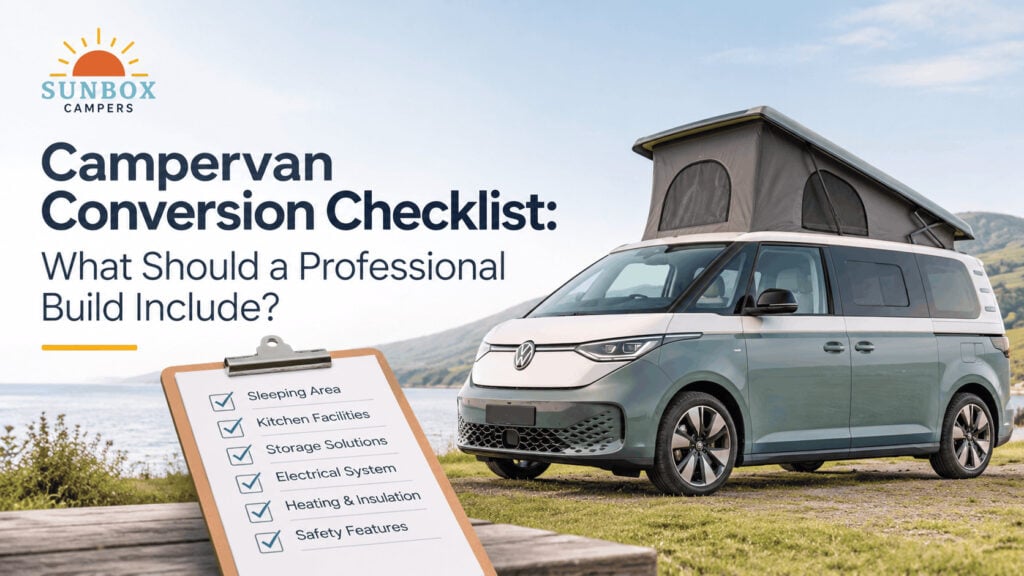
A campervan conversion can look impressive in photos, but the real test comes when you start using it. Is the bed comfortable? Does the kitchen work properly? Is there enough storage, and can you stay warm on a cold night?
A professional campervan conversion should be more than a collection of attractive cabinets and accessories. It should be carefully planned, safely fitted, and built around how you intend to travel.
Whether you’re converting a VW Transporter, Fiat e-Scudo, VW ID Buzz or another suitable van, this checklist will help you understand what to look for before approving a campervan build.
1. Base Vehicle and Planning
A good conversion starts before the first piece of furniture is installed. The base vehicle needs to suit your travel plans, passenger requirements and available budget.
A professional campervan conversion should include:
- A suitable van with a clear vehicle history
- A layout designed around the available space
- Enough belted seats for the intended passengers
- A practical sleeping arrangement
- A clear specification of included features and optional extras
Think about how you’ll use the van. A couple travelling for weekends may need a different layout from a family planning longer holidays.
2. Insulation and Interior Lining
Insulation helps maintain a more comfortable temperature inside the campervan and can reduce road noise.
A professional build should include:
- Suitable insulation for the vehicle and intended use
- Proper preparation of the interior panels
- Careful treatment of areas where condensation may occur
- Neat interior lining
- A durable and easy-to-clean floor covering
The quality of the work behind the lining matters just as much as the visible finish. Ask your converter what materials are being used and how the hidden areas are prepared.
3. Campervan Furniture and Layout
Campervan furniture needs to look good, but it also needs to work in a small space.
A well-planned interior should provide:
- Securely fitted cupboards and drawers
- Practical storage for everyday camping equipment
- A comfortable worktop
- A usable table or dining area
- Furniture that allows easy movement around the van
Hand-built campervan furniture can make a big difference when it’s designed for the exact vehicle rather than simply fitted wherever space is available.
4. Kitchen and Cooking Facilities
A proper campervan kitchen makes travelling much easier, especially when you’re spending several days away from home.
Depending on the design, a professional build may include:
- A kitchen worktop
- Sink and tap
- Water supply
- Fridge
- Cooking appliance
- Storage for food and kitchen equipment
The kitchen should be easy to clean and comfortable to use. Check that the fridge can be accessed without moving other items and that there’s enough worktop space for preparing meals.
5. Electrical System and Lighting
A campervan electrical system should be planned around your actual needs. A simple campsite setup will have different requirements from a van designed for off-grid camping.
A suitable system may include:
- Leisure battery
- Battery charging system
- USB charging points
- Interior LED lighting
- External electrical hook-up
- Inverter where required
- Solar panel as an optional charging source
Ask for a clear explanation of the electrical system, including what it can power and how the leisure battery is charged.
For electric campervans, the conversion also needs to consider the vehicle’s existing electrical systems and the practical demands of camping.
6. Heating and Ventilation
Comfort isn’t just about having a warm interior. Good ventilation is also important.
Depending on the vehicle and build specification, a professional conversion may include:
- A suitable heating system
- Ventilation through windows or roof vents
- Properly installed opening windows
- A practical way to manage moisture and condensation
Heating options depend on the base vehicle and the type of conversion. Your converter should explain which system is suitable and how it will work during your planned trips.
7. Bed and Sleeping Arrangements
The bed is one of the most important parts of a campervan conversion. It should be comfortable, easy to set up and suitable for the people using it.
Check for:
- Enough sleeping space
- A practical bed conversion mechanism
- Comfortable upholstery
- A suitable mattress or sleeping surface
- Easy access to storage when the bed is in use
If you’re considering a pop-top roof, check how it affects sleeping capacity, headroom and the overall layout.
8. Water and Plumbing
A campervan water system should be simple to use and easy to maintain.
Depending on the specification, it may include:
- Fresh water storage
- Waste water collection
- Water pump
- Sink and tap
- Accessible plumbing connections
Ask where the tanks are located and how they can be filled, emptied and cleaned. A well-designed system should make everyday tasks straightforward.
9. Safety and Professional Installation
Safety should never be treated as an optional extra.
Before accepting a conversion, check that:
- Furniture and equipment are securely installed
- Seatbelts and seating arrangements remain suitable
- Electrical work has been completed by a competent installer
- Cooking and heating systems are installed according to the relevant requirements
- Any modifications have been checked for their effect on vehicle weight and payload
If the conversion includes additional seating or structural changes, ask for the relevant documentation and evidence of compliance.
A professional converter should be able to explain what has been installed and provide appropriate information about the work.
10. Finishing Details and Handover
Small details often separate a well-finished campervan from a rushed build.
Look closely at:
- Cabinet edges and door alignment
- Smooth operation of drawers and cupboards
- Flooring around furniture
- Upholstery and stitching
- Window seals and trim
- Clean wiring and tidy fittings
Before collection, ask for a full walkthrough of the campervan.
You should understand how to operate the electrical system, heating, kitchen equipment, water supply and any pop-top or bed mechanisms.
Also check that you receive the relevant manuals, warranty information and aftercare details.
Conclusion
A professional campervan conversion should combine practical design, quality materials, reliable systems and careful installation.
The best build isn’t necessarily the one with the most accessories. It’s the one that suits your travel plans and makes everyday camping comfortable.
Before choosing a campervan converter, review the full specification, ask about the materials and installation process, and make sure you understand what’s included in the price.
A clear checklist can help you make a better decision and avoid disappointment once your campervan is on the road.
FAQs
What should a professional campervan conversion include?
A professional campervan conversion should include a suitable layout, insulation, interior lining, secure furniture, sleeping arrangements, kitchen facilities, electrical systems, ventilation and appropriate safety checks.
How do I check the quality of a campervan conversion?
Look at the furniture finish, wiring, insulation, storage, bed mechanism and installation quality. Ask to see completed conversions and request a detailed specification before committing.
Does every campervan need a leisure battery?
Most campervans with independent electrical equipment need a suitable leisure battery or another planned power solution. The battery size depends on the appliances and how you intend to use the van.
Is insulation important in a campervan?
Yes. Suitable insulation can help improve comfort, reduce noise and manage temperature changes. The right materials and installation method depend on the vehicle and conversion design.
Should I include heating in my campervan build?
Heating is worth considering if you plan to camp during colder months. Your converter can recommend a suitable system based on the vehicle, available space and intended use.
What should I check before collecting my converted campervan?
Check the furniture, bed, kitchen, electrical equipment, heating, water system and all included accessories. Make sure the converter explains how each system works and provides the relevant warranty and handover information.
How do I choose the right campervan converter?
Choose a converter with relevant experience, clear build specifications, examples of completed work and transparent aftercare. A good converter should be willing to explain the materials, systems and costs before the build begins.
Can I customise my campervan conversion?
Many professional campervan converters offer choices of layout, upholstery, flooring, wood finish, lighting and additional equipment. The available options depend on the vehicle and the conversion design.